
Dental Crowns in Leederville: Types, Procedure and What to Expect
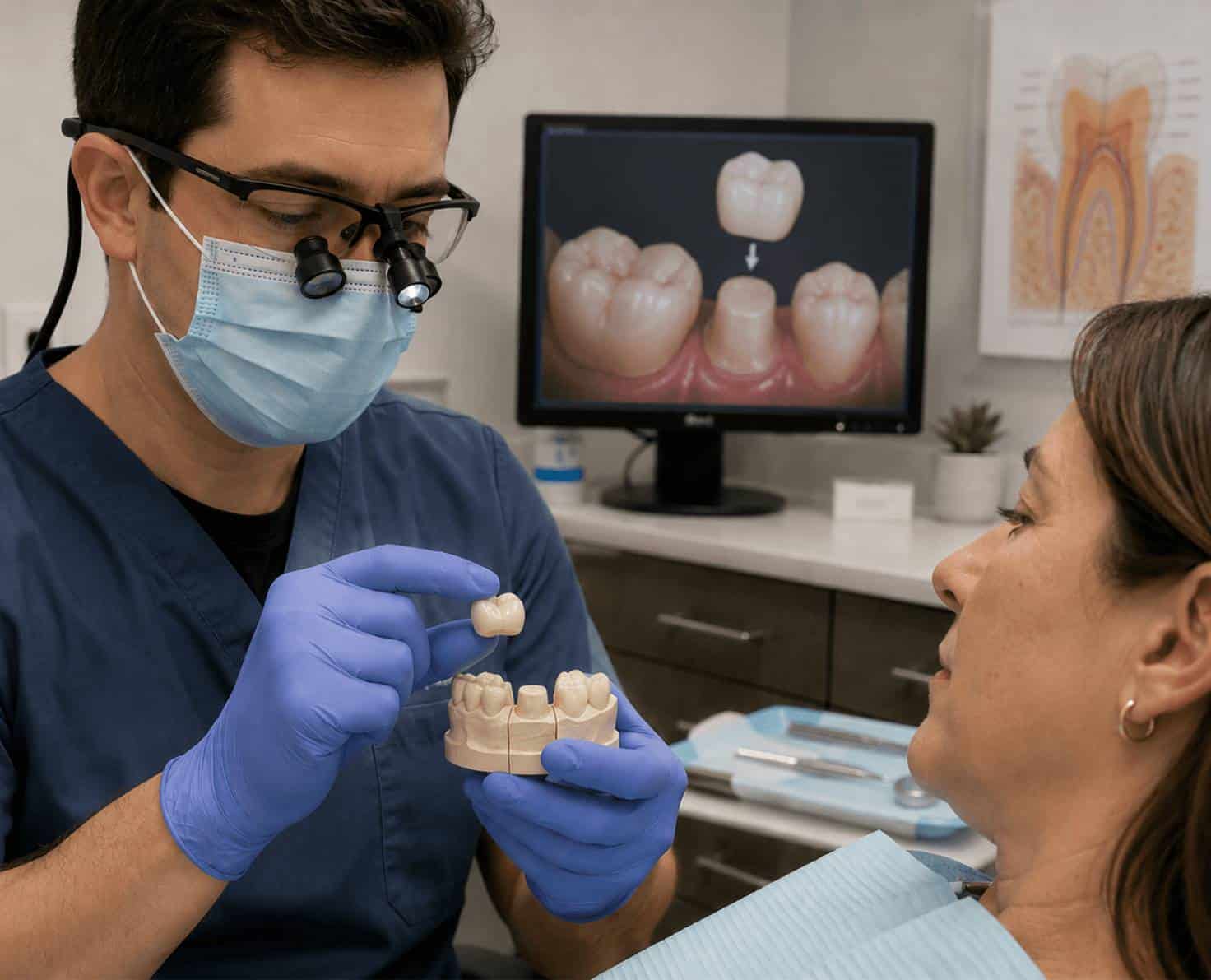
A cracked tooth, a weakened molar after root canal treatment, or a worn-down tooth that no longer functions properly — these are the moments when a dental crown becomes more than a clinical recommendation. It becomes the difference between saving a tooth and losing it. If you’ve been told you need a crown, or you’re simply trying to understand your options, this guide walks you through everything you need to know.
What Is a Dental Crown?
A dental crown is a tooth-shaped cap placed over a damaged or weakened tooth. The restoration covers all visible tooth structure above the gum line, rebuilding its shape, strength, and appearance so it functions naturally again.
Crowns are one of the most common restorative treatments in dentistry. When a tooth is too damaged for a filling but doesn’t yet need to be extracted, a crown is often the most reliable way to preserve it long-term.
When Is a Crown Recommended?
Not every damaged tooth needs a crown, but several situations make it the most appropriate treatment.
- After root canal treatment. A tooth that’s had root canal therapy is more brittle than a healthy tooth. A crown protects it from fracturing under biting pressure.
- Cracked or fractured teeth. A crack that causes pain when chewing or extends toward the gum line often can’t be managed with a filling. A crown stabilises the tooth and helps prevent the crack from spreading.
- Large or failing fillings. When a filling occupies more than half of the tooth’s structure, or an old filling begins to break down, a crown provides more stable, long-term coverage.
- Severely worn teeth. Teeth affected by grinding or acid erosion can lose sufficient structure that a crown is necessary to restore function and height.
- Dental implants. The crown is the visible component attached to an implant to restore a missing tooth.
- Cosmetic reasons. Severely discoloured or misshapen teeth that don’t respond to other treatments can be covered with a crown to improve appearance and a brighter smile.
Types of Crowns
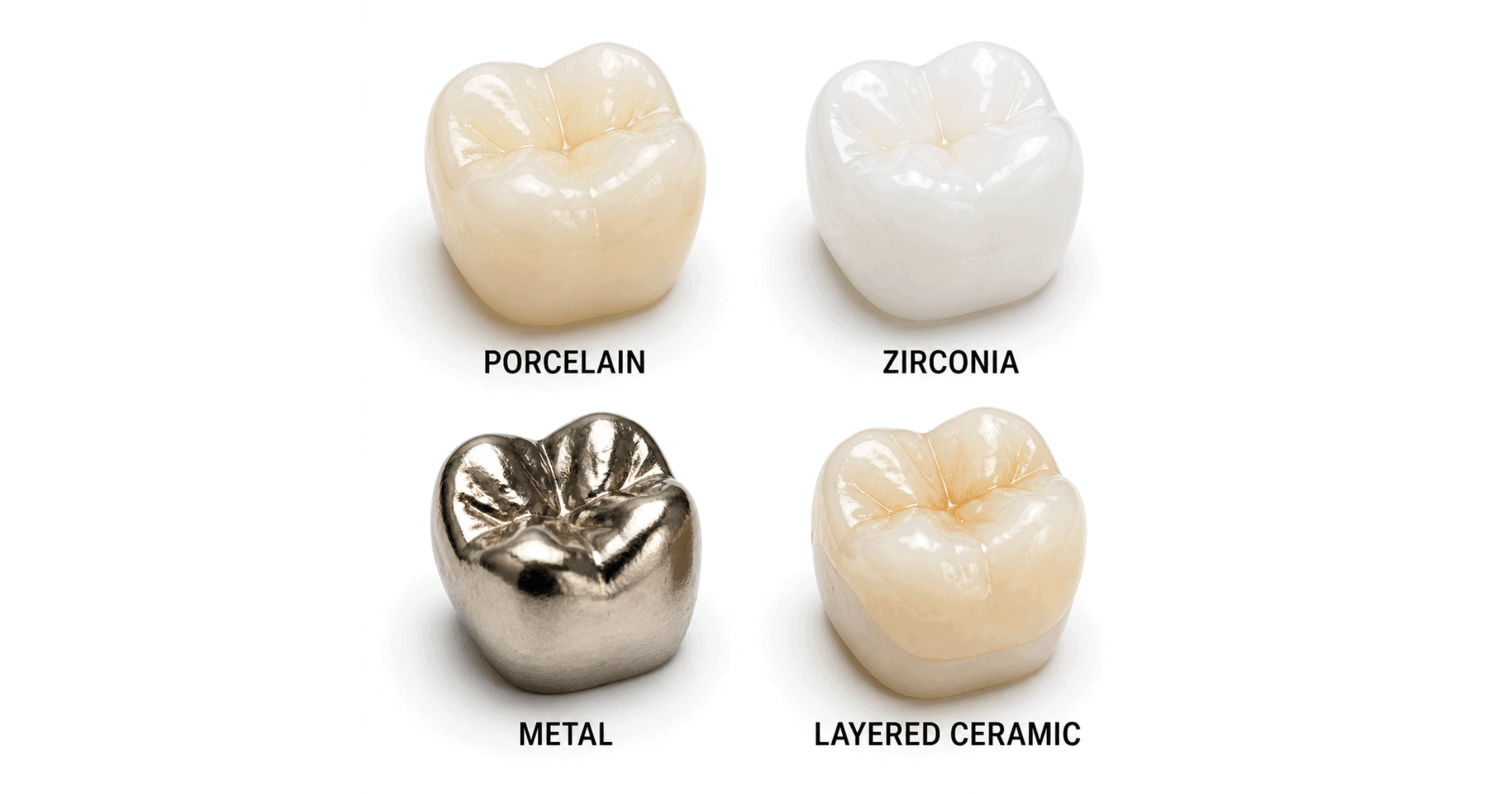
Crown materials have advanced significantly. The right choice depends on the tooth’s location, your bite, and your aesthetic preferences.
- Porcelain-fused-to-metal (PFM)– A metal base with a porcelain outer layer. Durable, but the metal substructure can show as a dark line at the gum margin over time. Largely replaced by newer materials in most cases.
- All-ceramic or all-porcelain – No metal, which makes these a strong aesthetic option for front teeth. They match natural tooth colour well and are biocompatible — suitable for patients with metal sensitivities.
- Zirconia – Extremely strong, making it well-suited to back teeth under heavy biting pressure. High-translucency zirconia also looks natural enough for front teeth. Metal-free and gentle on opposing teeth.
- E.max (lithium disilicate) – A glass-ceramic material with excellent aesthetics and reasonable strength. Often used for front teeth or premolars, where appearance is a priority and biting force isn’t extreme.
Your Leederville dentist will recommend the material that suits your clinical situation. For most patients, zirconia or ceramic-based options are the standard given their combination of strength and natural appearance.
The Crown Procedure
Dental crown treatment usually involves two appointments, although clinics with same-day CAD/CAM technology may complete it in a single visit.
First appointment — preparation
The tooth is numbed with local anaesthetic. Your dentist removes a small amount of enamel to make room for the crown, depending on the type of material being used.
Once shaped, your dentist takes either a traditional impression or a digital scan. The digital scan is faster and more comfortable, with no impression trays involved.
During the one to two weeks needed for lab fabrication, a temporary crown is fitted until the permanent one is ready.
Second appointment — fitting
Your Leederville dentist removes the temporary crown and verifies the permanent crown’s fit, bite, and colour before cementing it. Adjustments can be made at this stage. Once confirmed, the crown is permanently bonded.
After your appointments
Some sensitivity around the tooth and gum is normal for a few days after each visit and settles quickly. If your bite feels slightly off, a minor adjustment at the clinic resolves it. With proper care, dental crowns can last 10 to 15 years or longer.
Cost Factors
Crown costs vary depending on your specific treatment.
- Material. Zirconia and ceramic crowns involve different laboratory fees. The material recommended is based on clinical need.
- Tooth location and complexity. Back teeth require more preparation. A heavily broken-down tooth takes more clinical time than a straightforward case.
- Number of visits. If additional work is needed — such as a build-up before the crown is placed — this adds to the overall treatment involved.
- Health fund rebates. A rebate may apply if your private health insurance includes major dental cover. The amount depends on your policy, so it’s worth checking with your insurer before your appointment.
A consultation is the most accurate way to understand what’s involved for your specific tooth and the associated fees.
Frequently Asked Questions
How long does a dental crown last?
A well-fitted crown typically lasts 10 to 15 years, often longer. Longevity depends on the material, your bite, and oral hygiene. Grinding at night can shorten a crown’s lifespan — a night guard can help protect it.
Does getting a crown hurt?
The preparation is done under local anaesthetic, so you shouldn’t feel pain during the procedure. Any post-appointment sensitivity is temporary and usually settles within a few days.
Can a crown fall off?
It’s uncommon but possible, particularly if the tooth underneath develops decay or the cement weakens over time. Should your crown become loose or fall out, get in touch with your dentist promptly. Don’t attempt to re-cement it yourself.
Will my crown look natural?
Modern ceramic and zirconia crowns are matched to the colour and translucency of your surrounding teeth. For front teeth especially, the result is typically very natural-looking.
Is a crown the same as a veneer?
No. A veneer covers only the front surface of a tooth and is primarily cosmetic. A crown encases the whole tooth and is recommended when it is damaged or needs complete protection. They serve different purposes.
Dental Crowns in Leederville
A damaged tooth doesn’t have to mean losing it. If you’ve been told you need a crown — or you’re not sure where to start — book a consultation with our Leederville team and get a clear picture of your options.
At Dentists on Vincent Leederville, we welcome patients from Leederville and the surrounding areas, including West Perth, North Perth, Mount Hawthorn, and Subiaco.
Call us on (08) 9242 4400 or book online. Visit us at 322 Vincent Street, Leederville.
Book Your Consultation Today!
- We accept Eftpos, Mastercard, Visa Card, HICAPS and All Major Health Funds.
Contact Info
Dentists on Vincent Leederville
Address: 322 Vincent St, Leederville, WA 6007
Phone: (08) 9242 4400
Opening Hours
Mon: Closed
Tue: 9:30 AM – 5:30 PM
Wed: 9:30 AM – 6:30 PM
Thu: 9:30 AM – 5:30 PM
Fri: 9:00 AM – 3:30 PM
Sat: 8:30 AM – 12:30 PM (by appointment)
Sun: Closed
PARKING/PUBLIC TRANSPORT
There is ample car parking across the road from the practice
There are cafes and eateries within walking distance
LOCATION
Dentists on Vincent is located in Leederville, 14 min from Northbridge and only short stroll from Leederville Oval and Water Corporation
Leederville dentist also serving local communities in West Leederville, Northbridge, North Perth, Wembley, Floreat, Mount Hawthorn, Subiaco, Menora, Coolbinia and Jolimont.