
Dental Veneers in Perth: Types, Cost Factors and What to Expect
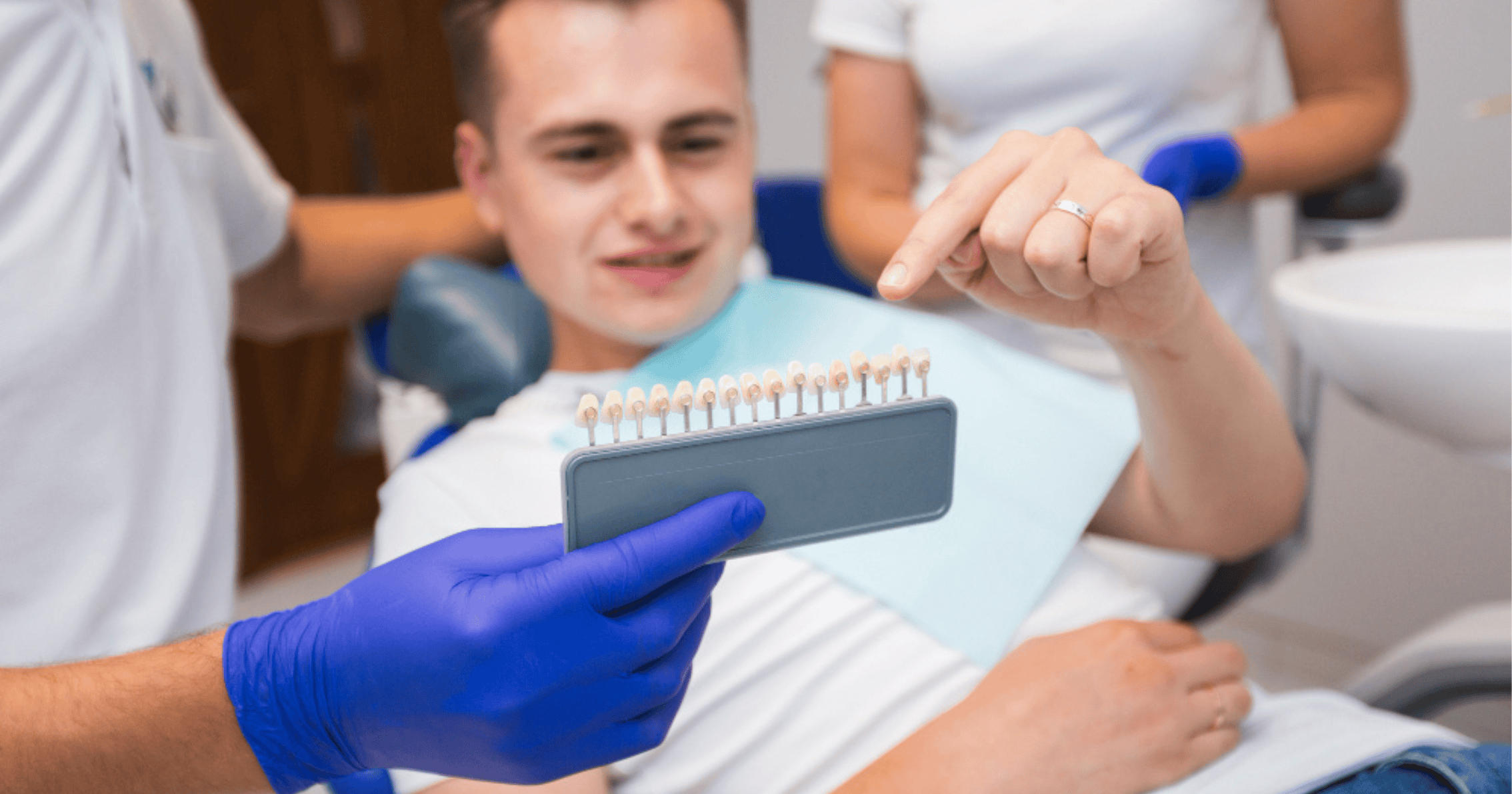
Your teeth play a big role in how you look and how you feel during a conversation. If chips, staining, gaps, or worn enamel are making you hesitant to smile, dental veneers in Perth could be worth understanding properly — not just the aesthetics, but the process, the differences between materials, and what actually influences cost.
This guide covers what you need to know before booking a consultation.
What Are Dental Veneers?
Veneers are thin, tailor-made shells attached to the front of teeth to enhance the smile, improving colour, shape, length, or surface texture without major alteration of the natural tooth.
They’re placed on the front teeth only, making them a cosmetic rather than a restorative solution if underlying damage or decay needs to be addressed before veneers are considered.
Each veneer is custom-crafted either to match surrounding teeth or to create a specific result planned with your dentist. Whether made from porcelain or composite resin affects appearance, strength, preparation, and related factors.
Porcelain vs Composite Veneers
This is the decision most patients find themselves weighing up. Both are valid options — they suit different situations.
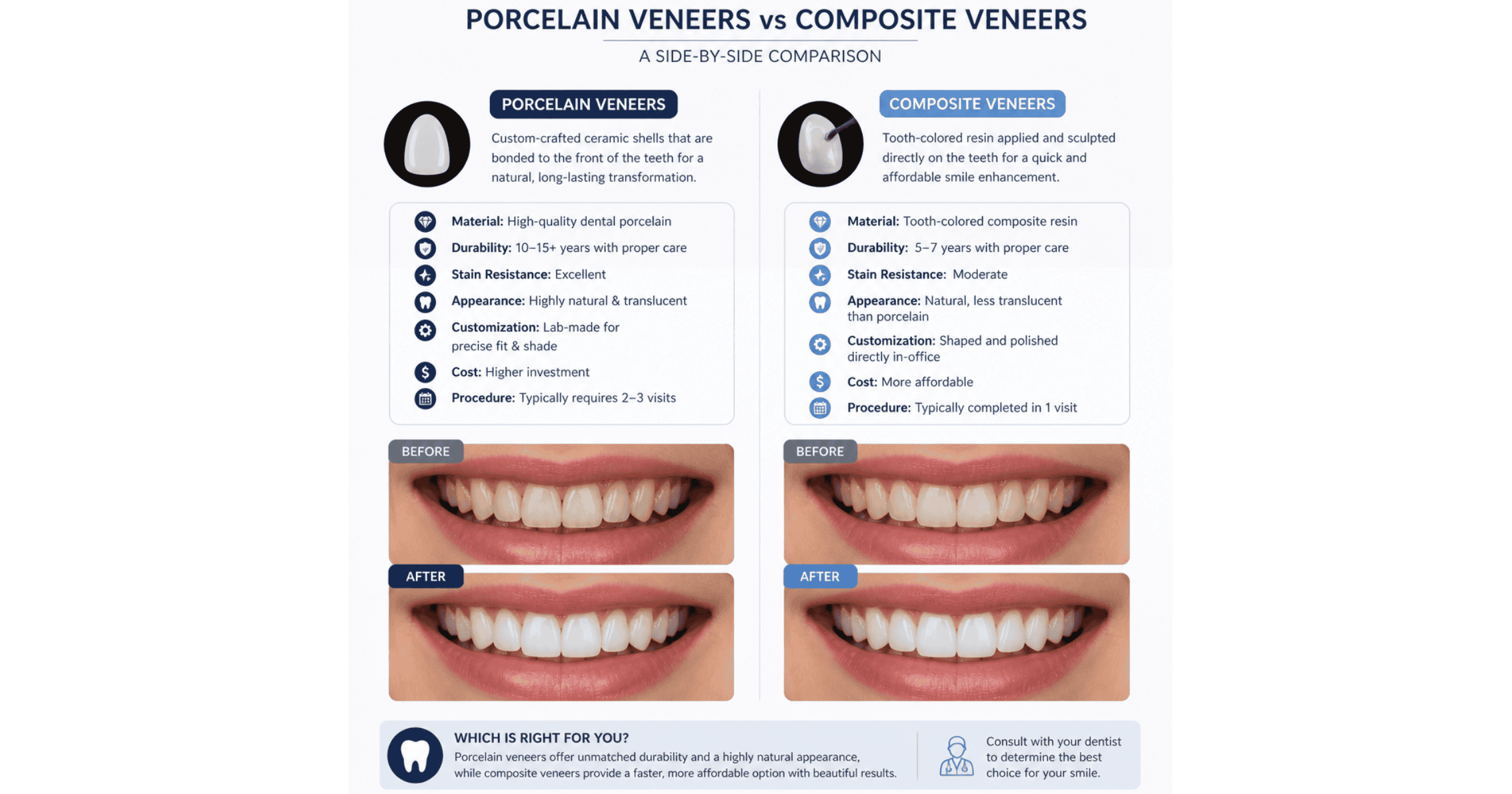
Porcelain veneers are made of ceramic material in a dental laboratory. They closely replicate the way natural tooth enamel reflects light, which tends to produce a more lifelike result. Porcelain is also highly stain-resistant, meaning the colour stays consistent over time. With proper care, porcelain veneers can last well over a decade.
The trade-off is that the process requires a small amount of enamel removal from the tooth surface to allow the shell to sit flush. This makes them irreversible — once the enamel is prepared, the tooth will always need coverage. There’s also a longer turnaround because impressions are sent to a lab, so the process usually takes at least two appointments over a couple of weeks.
Composite veneers are moulded and polished chairside in a single visit after being directly placed on the tooth with tooth-coloured resin. Less enamel preparation is typically needed, and in some cases, none at all. They’re also easier to repair — if a chip or crack occurs, the resin can be patched without replacing the entire veneer.
The limitations are lifespan and stain resistance. Compared to porcelain, composite resin stains more easily from drinks like tea, coffee, and red wine, and generally has a shorter lifespan.
Neither option is universally superior. The right choice depends on your teeth, your goals, and your dentist’s recommendations after a clinical assessment.
What Can Veneers Fix?
Veneers are a cosmetic treatment, so they work best when the concern is visual rather than structural. Common reasons patients explore veneers include:
- Discolouration that doesn’t respond to whitening treatments, including intrinsic staining or discolouration from certain medications
- Chips or small fractures on the front surface of a tooth
- Gaps between teeth that are cosmetically bothersome but don’t require orthodontic correction
- Minor misalignment, where teeth are slightly rotated or uneven, but not enough to warrant braces or clear aligners
- Irregular shape, including teeth that are unusually small, pointed, or asymmetrical
- Worn enamel, often from grinding or acid erosion, where the teeth look shorter or flatter
Veneers are not the right solution for teeth with significant decay, active gum disease, or very little enamel remaining. A thorough dental assessment will identify whether veneers are appropriate or whether another treatment would be more suitable.
The Veneer Procedure: What to Expect
The process differs slightly depending on whether you’re getting porcelain or composite veneers, but both begin the same way.
Initial consultation
Your Leederville dentist will examine your teeth, discuss what you want to change, and assess whether veneers are clinically suitable.
This is also where you’ll discuss material options and the overall treatment. Digital photos or impressions may be taken.
Tooth preparation
For porcelain veneers, a small amount of enamel — usually less than a millimetre — is removed from the front of the tooth to create space for the veneer.
For composite veneers, preparation is minimal or sometimes not required. A local anaesthetic is used to keep you comfortable.
Impressions and temporaries (porcelain)
After preparing the tooth, impressions are collected and sent to a lab where your veneers are custom-made. Temporary veneers are placed in the meantime to protect the prepared teeth and give you an idea of the result.
Bonding and fitting
When the porcelain veneers return from the lab — typically one to two weeks later — they’re checked for fit and colour, adjusted if needed, and then bonded permanently to the tooth surface. The dentist will cure the adhesive with a light and make any final refinements.
For composite veneers, the process happens chairside in a single appointment. The resin is applied layer by layer, shaped directly on the tooth, and then hardened and polished.
After bonding, you may experience mild tooth sensitivity for a few days. This is normal and typically settles on its own.
What Affects the Cost of Dental Veneers?
Dental veneer costs vary, and there’s no single price that applies across the board. The following are the main factors that influence what you’ll pay:
Material choice
Porcelain veneers involve laboratory fees and more complex placement, so they generally cost more per tooth than composite veneers. Composite is more accessible as a starting point.
Number of teeth
Whether you’re treating one tooth or eight significantly affects the total. Some patients treat only the most visible teeth; others opt for a full smile makeover.
Clinical complexity
Teeth that require more preparation or that present alignment, spacing, or structural considerations may take longer and involve additional steps.
Laboratory fees
For porcelain veneers, the fee includes the cost of having the veneers made by a dental technician. Lab quality and turnaround can vary between practices.
Health fund coverage
Most private health funds don’t cover veneers as they’re considered cosmetic. However, it’s worth confirming directly with your fund, as some policies cover a portion of the procedure costs. We recommend speaking with your health fund before your appointment.
Your Leederville dentist will provide a detailed treatment plan and fee estimate after your consultation, so you have a clear picture before committing.
Frequently Asked Questions
Do veneers look natural?
Yes. Modern porcelain veneers are designed to reflect light much like natural tooth enamel. Composite veneers, when well applied, also blend with surrounding teeth. Your dentist will match the shade and shape to what suits your face and existing teeth.
Are veneers permanent?
Porcelain veneers are considered irreversible because enamel is removed during preparation. The veneers themselves can be replaced when they reach the end of their lifespan, but the tooth will always need coverage. Composite veneers require minimal preparation and are considered more reversible, though this depends on the individual case.
Can veneers fall off?
It’s uncommon, but possible. Porcelain veneers are bonded firmly to the tooth surface. Factors that can affect bonding over time include teeth grinding, biting on hard objects, or a veneer that wasn’t properly fitted. If a veneer does come loose, contact your dentist promptly — don’t attempt to reattach it yourself.
Will my teeth be sensitive after veneers?
Some sensitivity in the days following placement is normal, particularly after enamel preparation for porcelain veneers. This usually settles within a week. If sensitivity persists or is significant, let your dentist know.
Which is better — porcelain or composite?
It depends on your situation. Porcelain is generally more durable and stain-resistant, making it a long-term investment. Composite is more affordable, completed in one visit, and easier to repair. Your dentist will help you weigh up both options based on your teeth, goals, and budget.
Dental Veneers in Leederville
If you’re considering dental veneers in Perth and want straightforward answers from a practice that knows your local area, we’re here to help.
At Dentists on Vincent Leederville, we see patients from Leederville and nearby suburbs, including Mount Hawthorn, North Perth, West Leederville, and Wembley. Our focus is on giving you the information you need to make a considered decision — no pressure, no rush.
Call us on (08) 9242 4400 or book online. You’ll find us at 322 Vincent Street, Leederville.
All surgical or invasive procedures carry risks. You should seek a second opinion from a suitably qualified health practitioner before proceeding.
Book Your Consultation Today!
- We accept Eftpos, Mastercard, Visa Card, HICAPS and All Major Health Funds.
Contact Info
Dentists on Vincent Leederville
Address: 322 Vincent St, Leederville, WA 6007
Phone: (08) 9242 4400
Opening Hours
Mon: Closed
Tue: 9:30 AM – 5:30 PM
Wed: 9:30 AM – 6:30 PM
Thu: 9:30 AM – 5:30 PM
Fri: 9:00 AM – 3:30 PM
Sat: 8:30 AM – 12:30 PM (by appointment)
Sun: Closed
PARKING/PUBLIC TRANSPORT
There is ample car parking across the road from the practice
There are cafes and eateries within walking distance
LOCATION
Dentists on Vincent is located in Leederville, 14 min from Northbridge and only short stroll from Leederville Oval and Water Corporation
Leederville dentist also serving local communities in West Leederville, Northbridge, North Perth, Wembley, Floreat, Mount Hawthorn, Subiaco, Menora, Coolbinia and Jolimont.